Showing posts with label low cost home. Show all posts

A Stone-Like $500 House


An old cob cottage about to be invaded by weekenders.

The Earth has voted on the best low cost building material to make houses with and it is....the earth itself! Recently we read that 70% of all buildings are made from earth (and that's not even including made-into-bricks or turned-into-concrete varieties). Besides these more common techniques, earth can be rammed, baked, put in sacks, pushed into tyres, shoveled on top of you, or any other method our sandbox minds can come up with.

We have a feeling earth is going to win our Cheapest House Challenge (at least in the materials cost department), it sure is hard to beat stuff that is already delivered free, to even the most barren of lots. Clay and sand can sometimes be found at different levels of the same soil. And while the above earth-stacking methods have their adherents, for our money you can't go past the tried and tested, D.I.Y., nothing-else-needed technique of cob.

Cob is the name for the particular ratio of clay-rich earth, sand and water, blended with hay, that forms a solid, durable building material. Usually also seen with stone for a base, these cob-and-stone buildings were the most common low cost home in pre-industrial Britain, when bricks took over to meet the needs of a large, urban population.

It is said that almost anyone can learn to build with cob, and that the technique lends itself to personal, perpetually adaptable, and a lovely slightly "wobbly" result. A cob building needs no structural formwork, and so it bypasses the need for carpentry skills. There are loads of cob building tutorials and information on the web, and we'll link to some of the best. One site that grabbed our attention was the Cob Cottage Company, who mention a $500 cottage their founders have lived in for years. No specific plans or photos were supplied, but using recycled features and group labor, the principle is sound. (And it sure is nice to think you don't have to beg your bank for a high interest loan, but can build your house with the kind of money you might make from a yard sale instead.)


The one thing cob houses don't have is speed - it takes about a day (with a whole bunch of helpers) to build about a foot of wall. But as a low cost building method it can't be beat. Helping speed things up is getting the right machinery (from hand held electric plows, concrete mixers, or bobcats) can make the job faster, and without a mortgage on your back would free up plenty of time!

There are a few basic tricks you need to know with cob building (but no less than any other material). One is cob must be protected from water, which necessitates high footings of stone or concrete for the cob to sit on (see below), and a roof that protects the walls from too much rain (the 'cap and boot' method). Applying a few layers of linseed oil to the surface also helps.


Another point to keep in mind is that cob needs to "breathe". Many people today in the UK, mistaking old cob buildings for stone, have painted them with contemporary paints, allowing moisture to build up inside the cob, and forming serious cracks. Cobs need only a lime plaster to cover their outside, which is usually white in appearance, but can be tinted to most any soft color.


Low cost homes that are also low fuel-bill, eco homes are a charm, and beat an energy-sucking trailer for a mile. Cob walls are thick (providing excellent thermal properties) to provide structural strength. Most contemporary cob buildings have curved walls to increase wall strength (or combine buttresses or built-in internal cob furniture, like fireplaces or chairs). We seem to have forgotten the technology somewhat of how to build the long, straight walls we see in old cob buildings from Europe.

A posh cob, UK style.

Planning Permission.
While cob can be used for your whole structure with a roof on top, it's said that submissions to government authorities can be smoothed over by placing load bearing timbers, perhaps at the corners of rooms or around windows and doors. If these support the roof, you essentially have a pole house, and most won't be too fussed about what "fills" the space in between the poles.In discussions with authorities, it is perhaps best to mention that you are not building a low cost home or using low cost building materials, rather, you are using a design that will fit in with the heritage of the area.


There are cob building workshops you can find in most countries once you tap into the networks. Cob building is such a social (and human labor run) activity that if you hear of any cob-building activity we suggest you volunteer your services. Helping out is the best way to learn; and once you are confident enough to build your own structure you can advertise for (and educate) more would-be cob interest volunteers.

For more cob information on low cost building with cob:

The Cob Builder's Handbook

A nice rundown by a couple building a 400 sq. ft. cob home, including receipts! - $10,000 in total, almost half of which was for the cement floor. See some low cost cob-compatible flooring alternatives here.

AddThis Social Bookmark Button

Henry David Thoreau's Cabin


If we are thinking of the archetypal low cost home in history, the classic has to be that of American author, environmentalist and social commentator Henry David Thoreau. Namely, the cabin he built at Walden Pond, near Concord, Massachusetts,
in March of 1845.

Henry dressed for a non- stone carting day.

Henry David Thoreau had dreamed of building a low cost home near a pond for years, perhaps starting with the six weeks in the summer of 1835 that he spent living with his Harvard classmate Charles Stearns Wheeler. Wheeler had built a one-room shanty near Flint’s Pond, in Lincoln. Henry David Thoreau had plans to buy land near Flint's Pond but it fell through, and the idea was carried for ten more years, before it came to fruition at Walden Pond. More accurately described as a small house than a cabin, Henry David Thoreau's design followed a traditional model of many low cost homes of the period. It was well built, and more than adequately stood up to the area's often cold winters.

The original has long since been destroyed, however its whereabouts were rediscovered by Roland Robbins in 1945. Robbins himself built a replica nearby
Walden Pond. For US$30 you can actually buy the plans for the cabin that Robbins drew up, and were used to create the replica pictured above. Go to the Thoreau Society website to purchase them, and have them sent to you in hard copy. (If building a thousand brick hut sounds too onerous, there is also a free downloadable paper model version here). We have bought the plans - they're lovely to set out on the kitchen table). It's nice to think Henry David Thoreau would approve of people having access still to an open-source, low cost plan; and purchase helps with protection of the Walden Pond site.

In other ways Thoreau would perhaps not approve of a low cost building by numbers approach. In Walden Henry David Thoreau states his belief that architectural beauty comes from the unique character of the home dweller, even if Walden Pond has become a collective cultural dream site. A lovely idea to keep in mind, and in this spirit a nice, personal version (not a replica) of Walden has been made by Jim Cadwell.

You can follow the process of construction on his website here.

Then there are Walden Pond-like projects, amongst them this one on Prince Edward Island.

In Walden,
Henry David Thoreau not only outlines his philosophy which underlay his decision to build at Walden Pond, but also much of the building process also. I highly recommend it for both reasons. The Walden Pond building was made as an experiment in basic living, to "learn" from nature, but also in which to work. In terms of the latter it was most successful - the two years spent at Walden Pond were amongst Thoreau's most productive periods of writing.

A rough outline of the construction (from Walden) is as follows:


Land:
Despite the legend of Walden Pond, the house was not isolated, rough
, or on squatted land. It lay less than two miles from his family home, and from town, on the property of Ralph Waldo Emerson, who had bought fourteen acres in 1844. Use of the land was "paid for" through basic maintenance of the surrounding woodlands, clearing land of briars (where Thoreau planted beans for himself), the replanting of trees, and building of fences. As his friend Ellery Channing put it, other than that Thoreau was free to “devour” himself alive if he so wanted (a terrible thought!).


The original house site...with Walden Pond over the rise behind


Henry David Thoreau spent just over two years at Walden Pond (never considering it a permanent home) and it returned to Emerson when he departed. Perhaps eventual ownership was another incentive for Emerson to lend the land.

Dimensions:
The hut was one room of 10’ x 15’ (4.57 x 3.05m), it also contained
a wood shed, and cellar dug into the side of a hill. I assume there was also an outhouse (in Henry David Thoreau's time, chamber pots were used indoors). Walden Pond served for washing and cleaning in the warmer months.


Materials:
Walden's materials were the ideal low cost building approach - a mix of free materials (timber from trees, stones and sand from the
Walden Pond banks), reclaimed materials (he bought a dilapidated shack and reduced it to bare materials, all in one morning), and only the most basic supplies from town. In Walden he states that, in reality, man needed only a cave to survive, but in modern society lime and wood are easier to come by.

Cost:

Materials for Henry David Thoreau's Cabin (From his notebook)

In brackets I have given a (very) approximate conversion into today's money. Considering a day's wages was approximately $1 in 1845, a rough sense of the costs involved can be gained by multiplying each figure an average day's wages today. For ease I have done so by about 100.

  • Boards: $8.04 "mostly shanty boards" ($800)
  • Refuse shingles for roof and sides: $4.00 ($400)
  • Laths (strips of wood for plaster to adhere to): $1.25 ($125)
  • Two second-hand windows with glass: $2.43 ($243)
  • One thousand old bricks: $4.00 ($400)
  • Two casts of lime: $2.40. ($240) "That was high. " (A "cast" is an old measurement, lime being "cast" out from a mold.)
  • Hair: $0.31. "More than I needed" ($30 of hair is more than we need today, too!)
  • Mantle-tree iron (Iron for the Fireplace?): $0.15 ($15)
  • Nails: $3.90 ($390)
  • Hinges and screws: $0.14 ($14)
  • Latch: $0.10 ($10)
  • Chalk: $0.01 ($1)
  • Transportation: $1.40. "I carried a good part on my back." ($140)
In all: $28.13 ($2,800)

We can assume the whole project cost somewhere between $1,500 and $3,000 - cheap in anyone's books! Henry David Thoreau compared the cost of building his house as similar to the cost of one year's rent on his college room. Thus, the idea (he raised in Walden) was that students should build their own accommodation, and avoid being indebted to property speculators and landlords. He states "In the capitalist system the students lose thrice: first, they have the extra expense, second, they experience idle leisure, and third, they don't gain practical experience."

Writing on large wooden boards also helped save Thoreau money.


Labor:

Much of the labor was done by Henry David Thoreau himself, using skills gained having assisted in the
building of houses previously. The sides of the building were done on the ground, then raised onto a stone foundation, and a roof added - the latter with the support of a small group friends.


Tools:
Famously, Thereau borrowed an axe to complete
Walden Pond, which he proudly returned "sharper than when he borrowed it". Several other tools were later acquired - including an abandoned axe which he found in the forest.

Some would call a bronze self portrait in the front garden an extravagance.

Time:
In a month Thoreau had cleared the land (the first part of his 'deal'), and by the first year at Walden Pond Thoreau built his house and established substantial crop gardens for himself, enough to have a surplus in which to trade.

All in all, at
Walden Pond Henry David Thoreau approached his long time goal of working one day in seven, or six weeks of a year. In 1837 he wrote, “The order of things should be somewhat reversed – the seventh should be a man’s day of toil…and the other six his Sabbath…”

After he decided it was time for him to leave the cabin on Walden Pond, he recounted his reasons for going:

"I left the woods for as good a reason as I went there. Perhaps it seemed to me that I had several more lives to live, and could not spare any more time for that one...I learned this, at least, by my experiment: that if one advances confidently in the direction of his dreams, and endeavors to live the life which he has imagined, he will meet with a success unexpected in common hours.... If you have built castles in the air, your work need not be lost; that is where they should be. Now put the foundations under them."


AddThis Social Bookmark Button

The Shelterseeker Cheapest House Challenge

We are starting The ShelterSeeker Cheapest House Challenge! We are inviting people to submit their own design, or examples they find (in books, real life, or the web) - for the ultimate low cost home. The winner will win eternal glory, and the satisfaction of being inspirational for many people to create a low cost building of their own.

This is an open contest, with no deadline. (In truth, all the entries are merely a valuable resource for people looking for their own perfect design). So get cracking! A current leaderboard is to be found on the column to the right.

Criteria
Entries will be ranked with a loose reference to the following crieria:

Cost
We are talking radically low cost building approaches here. An ideal winner will come in at around the cost to build of a year's inexpensive rent. Several designs will scoop the pool by being very much under this figure - some are currently only one or two thousand dollars!

Being Already Tested
A low cost building isn't the only criteria - and we're not looking for diagrams of your bird-powered laserbeam castle. Higher scoring entries would have been not only possible, but already built, and will come with pictures of th eproject. A list of materials bought and a breakdown of all costs will be highly valued by the judges.

Easy to Build, Easy to Follow
We are also valuing entries that come with extremely clear, illustrated, step-by-step guides that anyone with basic abilities and tools can construct for a low cost home. The best case scenario is for royalty free, open source plans that can be downloaded at no cost by anyone. If plans come from a company that charge for their services, they should be available at low cost. Houses that can be built in a rapid amount of time will do well, also.

Basic Emenities
Some projects come without kitchens, bathrooms, insulation and other - well - necessities. Inclusion of these is not a prerequisite, but we will (mentally) tack on a $500 - $1000 dollars or so, to bring them to parity with those that do (a compost toilet can be installed for about $500).
We are looking for a high level of general "livability", meaning aesthetic decisions will also play a part.

Ecological Footprint
Highly prized will be designs that use local materials (reducing the need to transport large distances), recycle, have good energy efficiency, and low toxicity.

Land
While a solution to the problem of expensive land prices is not vital, it would be an advantage if the author or nominator could point out solutions to this thorny issue, also.

This is the early stages of the challenge, so if you would like to se further criteria, let us know. And if you would like to argue about the current leaderboard positions, we are always open to suggestions!

You can send all entries to soggyindo (a) gmail.com

Good luck!

AddThis Social Bookmark Button

100 Tips for a Cheap House

House building figures are usually counted in scary dollar-per-square-foot figures. Houses are expensive, but much of the cost can be bypassed with the help of some basic shuffling. Think of the following as a brainstorming guide - each one might conceivably be added to a conventional low cost home plans and save you thousands. There are less than a hundred tips here because we're waiting on your tips - and each one will form the basis of future posts.

1. Free is Better than Cheap

A free kitchen offered on www.freecycle.org

The cheapest option you are going to have is if someone gives you something, and almost all low cost building approaches make good use of the generosity of friends and strangers. Think of ways to get free things you might need - land, building materials, and helpers. Knowledge that they are helping others, and a small, heartfelt thankyou gesture of thanks (such as a card, dinner party, working bee lunch, or invitation to stay in your home) may be all that some people need by way of payment.

2. Trade Your Abilities
If you can't afford to buy things, think of what you can trade. What do you do in your daily life that to others is equally difficult for them? Even Thoreau traded looking after land for the building of his hut (see post).

3. Move it!
Can't find the perfect house in the perfect place? Buy them separately! On-line classifieds like ebay it is easy to find a low cost home that is transportables, or houses for the buyer to demolish and transport. Often these are at severely reduced prices, for the seller can be rid of the house to rebuild. We have even seen advertised houses to take away and a payment of $2000! Even considering the time and money of dismantling and transporting, getting money for your building materials is the ultimate in low cost building.

4. Capital Gains
Before you get overly excited about your hobbit-hut in the side of a hill, think to the end of your project, when time comes to sell and move on. A low cost home needn't be a low yield investment. Think - will all your costs and efforts be rewarded in a resale? The best low cost building will be the one that actually brings you a profit in the end.

5. Recycle!
See our (future) posts on wood pallet floors, door tables, and fixing up transportable buildings. Consider shipping container architecture. Your house is out there - it just needs a little reordering!

6. Transit
Can't find a low cost building in an area you need? Consider all that cheaper land between two areas you like visiting regularly. There may be a little island of calm that suits you fine. Suddenly you have reduced both your property costs, and the distance to your favorite places you like to see.

7. Go Mobile
We have been amazed by the movement to beautiful, mobile, and very 'real' low cost homes. Stay tuned for a feature on this.

8. Think About Your Final Destination
Ok, so you can't afford your castle in rural France. That doesn't mean you need to forget it altogether. You could buy and renovate a smaller low cost building from a similar period, gaining skills that will be useful when you later buy. Or perhaps look for smaller French properties, to learn the laws and procedures you'll need when you are able to get closer to achieving your dream house.

9. Friends Indeed
Your friends will be your best asset when the time comes to build, renovate, or clear a property. But why not consider going in with them more substantially? Dividing ownership can reduce your costs (and labor and time) by half, two thirds, or three quarters - it all depends on the size of the property, and how much of it you "need" to keep.

10. Mi Casa...
While it was famously declared that "all property is theft" - we can all at least agree on the point that leaving a property vacant is a shame. Share your newfound home ownership, and have your generosity returned to you in wonderful and unpredictable ways.

11. Trade Up
You will save thousands if you can rely on your own abilities rather than forking out for someone else's. Simple ways to learn basic trades include adult education short courses, books, online resources, and even volunteering in charity housebuilding - of which many exist internationally (often in the third world). You not only get a great sense of helping others, you'll gain invaluable skills you can apply to building your own low cost home.

12. Simplify, Simplify
You may not think you can live in a tiny house. But what if you only had half of your possessions? Fortunately, the trend towards miniaturization in almost every aspect of our lives helps us out. Swap your bulky 1990s stereo for an Ipod (and miniature speakers), your desktop PC for a laptop, your bulky wardrobe for a sleek Ikea number. File your data to that great big attic known as the internet, even. Hire external storage space for things you don't use often. Dropping all that extra room you use to store stuff will save you thousands. "Leaving out" is the biggest tip in low cost building.

13. Migrate!
Be a true modern day pioneer. There may be parts of the country (or indeed the world) that you disregard as a possible home site, due to the climate. Fortunately, so do millions of others! We can do what the animal kingdom does when there is competition - adapt. Invest in air conditioning (for your house and car) or extra insulation. Land was once sold for $1 in central Australia, because few people wanted to spend time there due to the fierce summers, but in winter the weather was ideal. Learn from the birds, and move between different areas over a year. That desert or tropical place might be too hot in the summer, but it'll make all your friends jealous in winter! Likewise, that cold mountain top site will be great to move to in summer. Similar places are perfect locations to search for existing, unwanted, and low cost homes.

14. Low Cost Building Materials
There is really no need to buy new building materials. While most of us won't want to straighten out old nails, or make our own lime, most every type of building material, from doors to lumber, ends up in salvage yards, as well as online on sites like Freecycle, Ebay and Craig's List, or thrown out at tips. Even new building materials can be bought at auction houses for a fraction of their retail costs.

15. Find it on the Back of a Truck?
Know someone who is a tradesman? They might be able to sell you some materials, or let you use their trade discount.

16. Two For the Price of One?
We all know things like dog food, toilet paper and beer is cheaper by the bulk, so why not houses? Sometimes you can find two houses advertised together, at a discount to save time in selling them. Why not go in with a friend or family member (how often do you get to chose your neighbor?), or else sell one yourself and take the profits.

16. Go Upwards
Skyscrapers are built for one reason - land is expensive and as buildings they're cheap per square foot. Even for houses, going up (rather than out) is a good option for a low cost home.
"Building up often saves money as the foundation and roof tend to be the most expensive (and technically difficult) parts of the buildings. You could put living/cooking/washing areas below and sleeping above. This makes heating the space easier, as you can heat the lower level and control the passage of heat up into the 2nd story (or loft) as you need it. A higher initial roofline also simplifies later additions, as the add-on roofs can be tucked under the original one. The only real disadvantage of a 2-story is that it requires more wood and more carpentry than a single-story cob building." Says Michael G Smith, from www.greenhomebuilding.com

17. Play to Your Own Tune
If you employ an architect, they will usually first talk with you extensively, to discover what are your unique needs, constraints, and priorities. "Form follows function", as they say. If you are designing your own house, it is easy to forget about this, and get stuck on what your "dream house" looks like. This could make things slower, more difficult, and more expensive in the end.

In designing your own low cost home, think about the top ten priorities you have. Is it price-at-all-costs, or is anything under $20,000 okay? Do you need to expand your structure later on, and what for? What is more important, low cost building, speed of construction, or insulative properties? These type of decisions will influence the style, and material, of construction best suited to you. For instance, straw bales may go up faster than cob, but they are more susceptible to rodents. We all have more than one style of house that can make us happy.


Any more tips? Post them here.


AddThis Social Bookmark Button

The $1400 house

The owner of this site offers plans for sale for a low cost building he built over three weeks with his two sons, for $1400. Using mainly new materials, the cost could be further reduced by adapting and recycling. While it has no bathroom or kitchen, a simple compost toilet could be added.

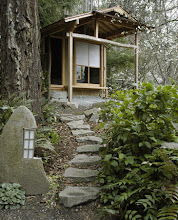
A little zen, no?

A zen sauna, perhaps?

See a pretty thorough tutorial on how this house was built (click on the link that says "photos and plans").


There are also quite cute, more traditional plans at the extensive main site. Their "Little House Plan" (somewhat similar to the house above, and including a loft bed) is supposed to be even cheaper than the $1400 house (!). While no specific dollar amounts were given, it looks like quite an ideal rural, low cost home.

AddThis Social Bookmark Button

Cheaper than Cleaning?


The only thing better than cheap is free, right? So here's a great tutorial for finding, and more importantly installing, free (used) windows for your own low cost home. The photo's neglect to show any blisters and splinters, but it all does seem pretty painless.

You can see the full article at the always great Instructables, here.

AddThis Social Bookmark Button

Brick Pallet Flooring

It's funny how long it can take for us to recognize the obvious low cost building techniques. The sort that any self respecting castaway wouldn't miss for a minute. We see expensive, house building materials (including uber-expensive timber flooring) arrive at site on wood pallets. The pallets then lay around for a while, are left by the side of the road, or crushed. Hello!

Well, plenty of people have used discarded wood pallets for all sorts of things (fences, sheds, bed bases, compost bins, etc.), and "scrounging" is an age old technology.

Pallet bigfoot fence

Pallet chicken coop

...and pallet shed.

As a low cost building material for low cost houses, they have been somewhat neglected. Well, finally someone is trying to make use of these wasted pallets (and make money) on an industrial scale. The website www.palletflooring.com wasn't up when I checked, but I did find what looks like a nerdy corporate Powerpoint presentation detailing their process. Here's a pic of what the finished product looks like:


Nice!

For a great step-by-step guide to removing pallet wood for reuse yourself, see the tutorial here. (We would've thought punching the nails in would save time (and wood) - but hey.

If anyone has any tips for planing, staining and laying pallet wood floors, perfect for an eco, low cost home approach - we'd love to hear them!

AddThis Social Bookmark Button

A Door Dining Table!


Don't you love it when cheap DIY options don't look - well - so DIY? That's why we love the door/desk, door/dining table phenomenon so much. As well as recycling an old door, this substantially sized dining table won't set you back much, and with a bit of know-how will give you an uber "luxe" feel you can enjoy everyday.

Several articles tell you how to go about making these lovely additions to your low cost home. A door/office desk project can be found here, otherwise for a door dining table, see here for a full article.

AddThis Social Bookmark Button